Easter Library Closure

Please be advised that the Palm Desert Library will be closed on Sunday, April 5 in observance of Easter.

National Poetry Month: Recommended Reads

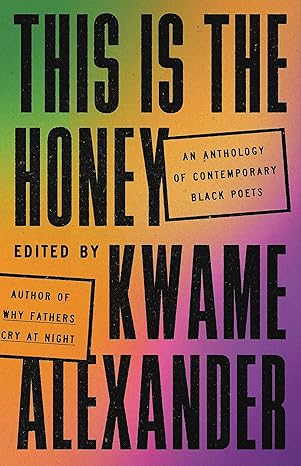
Image for "This Is the Honey: An Anthology of Contemporary Black Poets"

This Is the Honey: An Anthology of Contemporary Black Poets

In this comprehensive and vibrant poetry anthology, bestselling author and poet Kwame Alexander curates a collection of contemporary anthems at turns tender and piercing and deeply inspiring throughout. Featuring work from well-loved poets such as Rita Dove, Jericho Brown, Warsan Shire, Ross Gay, Tracy K. Smith, Terrance Hayes, Morgan Parker, and Nikki Giovanni, This Is the Honey is a rich and abundant offering of language from the poets giving voice to generations of resilient joy, “each incantation,” as Mahogany L. Browne puts it in her titular poem, is “a jubilee of a people dreaming wildly.”
 
This essential collection, in the tradition of Dudley Randall’s The Black Poets and E. Ethelbert Miller’s In Search of Color Everywhere, contains poems exploring joy, love, origin, race, resistance, and praise. Jacqueline A.Trimble likens “Black woman joy” to indigo, tassels, foxes, and peacock plumes. Tyree Daye, Nate Marshall, and Elizabeth Acevedo reflect on the meaning of “home” through food, from Cuban rice and beans to fried chicken gizzards. Clint Smith and Cameron Awkward-Rich enfold us in their intimate musings on love and devotion. From a “jewel in the hand” (Patricia Spears Jones) to “butter melting in small pools” (Elizabeth Alexander), This Is the Honey drips with poignant and delightful imagery, music, and raised fists.
 
Fresh, memorable, and deeply moving, this definitive collection a must-have for any lover of language and a gift for our time.
 

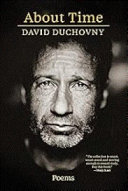
Image for "About Time"

About Time

DAVID DUCHOVNY'S DEBUT BOOK OF POETRY covers a range of intimate themes, in particular his relationship with his father, who looms large throughout the work. Here, Duchovny's typically clever wordplay distills to an emotionally impactful portrayal of what the author holds most dear. His approach to poetry is beautifully encapsulated in his introduction:

Poetry is not useful. And that is exactly why we need it. It reminds us of two important things: our ultimate lack of agency (unpopular to say, I know) and our inability to say anything plain, our inability to capture what it means to be human with the imperfect tool of words; we come face-to-face with our shadow selves, for in the end we will all die and be forgotten, and come away with nothing, nothing in the way of utility anyway, no talking points, no bullet points, no propaganda, no resolutions, no policy, no knowledge. If anything, maybe we remember a few lines . . . something like a pop song from the collective unconscious, something like wisdom . . . You see, I wanted to say it plain, but out comes that torrent of modifiers and adjustments, denials, double negatives, shading, stabs at wit, backpedaling, playing at capturing the lightning. Maybe this time. Maybe that's what a poem is--that glorious feeling of Maybe this time I'll get it right. If that's the case, it seems a worthy enterprise to me.

With About Time--perhaps his most personal work to date--Duchovny (author, actor, singer-songwriter, filmmaker, podcaster) continues his journey as one of our most prolific creators.

Front cover photo (c) Stefan Sappert

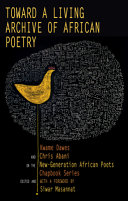
Image for "Toward a Living Archive of African Poetry"

Toward a Living Archive of African Poetry

TOWARD A LIVING ARCHIVE OF AFRICAN POETRY collects Kwame Dawes's and Chris Abani's introductory essays for the New-Generation African Poets Chapbook Box Set Series. These essays are conversations that celebrate the work of emerging African poets and build--meticulously and with principled care--a vision of a pluralistic literary community in which poets may thrive. Over more than ten years, Dawes and Abani have offered readers a glimpse into their editorial labor and philosophy, which are guided by generosity and curiosity and trust in the work of African poets. Dawes's and Abani's editorial labor is a gift, an expansive curation that honors the past, present, and future of African literature.

In 2024, the APBF celebrates the publication of the tenth edition of the New-Generation African Poets Chapbooks Box Sets. Each of the box sets, edited by Kwame Dawes and Chris Abani, feature a selection of chapbooks by emerging African authors who have not yet published a full-length collection of poetry.

Many thought-provoking threads related to African poetics appear across the essays. They advance a transnational vision of and for African poetry, one arising from their literary leadership to imagine and create a landscape in which the work of as many poets as possible can thrive, receive recognition, and be preserved for future generations. For, as they mention in their introduction to NANE, "the idea of a poetic community enacts the promise of being seen."

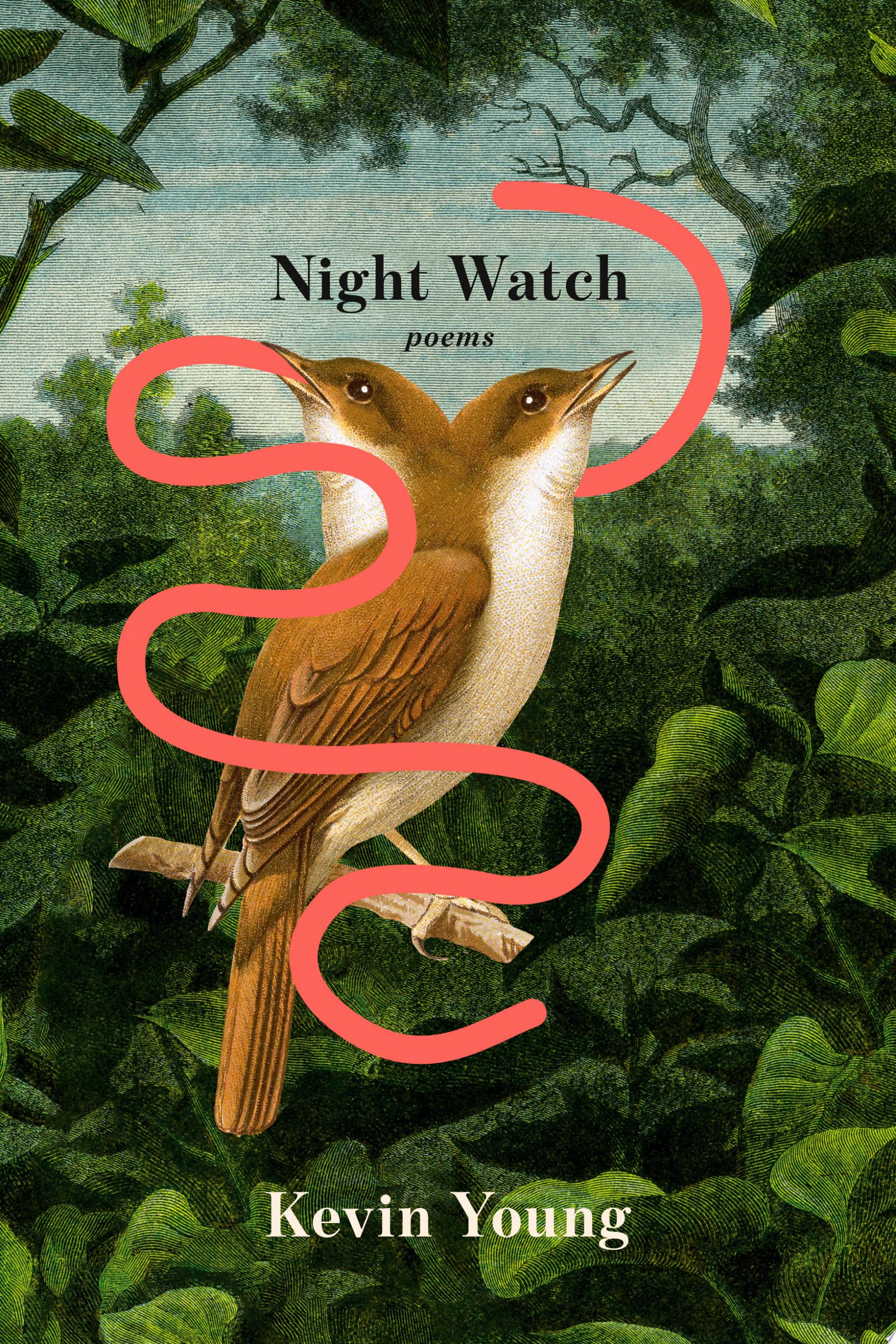
Image for "Night Watch"

Night Watch

A NEW YORK TIMES NOTABLE BOOK • WINNER OF THE NATIONAL BOOK CRITICS CIRCLE AWARD FOR POETRY • LONGLISTED FOR THE GRIFFIN POETRY PRIZE • A New York Times Book Review Editors' Choice • From the award-winning poet at the height of his career, a book of personal and American experiences, both beautiful and troubling, touching on the generative cycle of loss and renewal

“Kevin Young is a poet of exceptional depth and sensitivity. . . . Let yourself focus on every phrase.” —Ron Charles, The Washington Post

"Night Watch continues one of the most vital currents in contemporary poetry, transforming history and its silences into lyric through the poet’s eloquent invitation: ‘O wounded soul,/ speak.’” —The New York Times

Following on his exquisite Stones, Kevin Young’s new collection, written over the span of sixteen years, shapes stories of loss and legacy, inspired in part by other lives. After starting in the bayous of his family's Louisiana, Young journeys to further states of mind in “All Souls,” evoking “The whale / who finds the shore / & our poor prayers.” Another central sequence, “The Two-Headed Nightingale,” is spoken by Millie-Christine McCoy, the famous conjoined African American “Carolina Twins.” Born into enslavement, stolen, and then displayed by P. T. Barnum and others, the twins later toured the world as free women, their alto and soprano voices harmonizing their own way. Young’s poem explores their evolving philosophical selfhood and pluralities: “As one we sang, /we spake— / She was the body / I the soul / Without one / Perishes the whole.”
In “Darkling,” a cycle of poems inspired by Dante’s Divine Comedy, Young expands and embroiders the circles of Hell, drawing a cosmology of both loneliness and accompaniment, where “the dead don’t know / what to do / with themselves.” Young writes of grief and hope as familiar yet surprising states: “It’s like a language, / loss—,” he writes, “learnt only / by living—there—.” Evoking the history of poetry, from the darkling thrush to the darkling plain, Young is defiant and playful on the way through purgatory to a kind of paradise. When he goes, he warns, “don't dare sing Amazing Grace”—that “National / Anthem of Suffering.” Instead, he suggests, “When I Fly Away, / Don't dare hold no vigil . . . Just burn the whole / Town on down.”
This collection will stand as one of Young’s best—his voice shaping sorrow with music, wisdom, heartache, and wit.